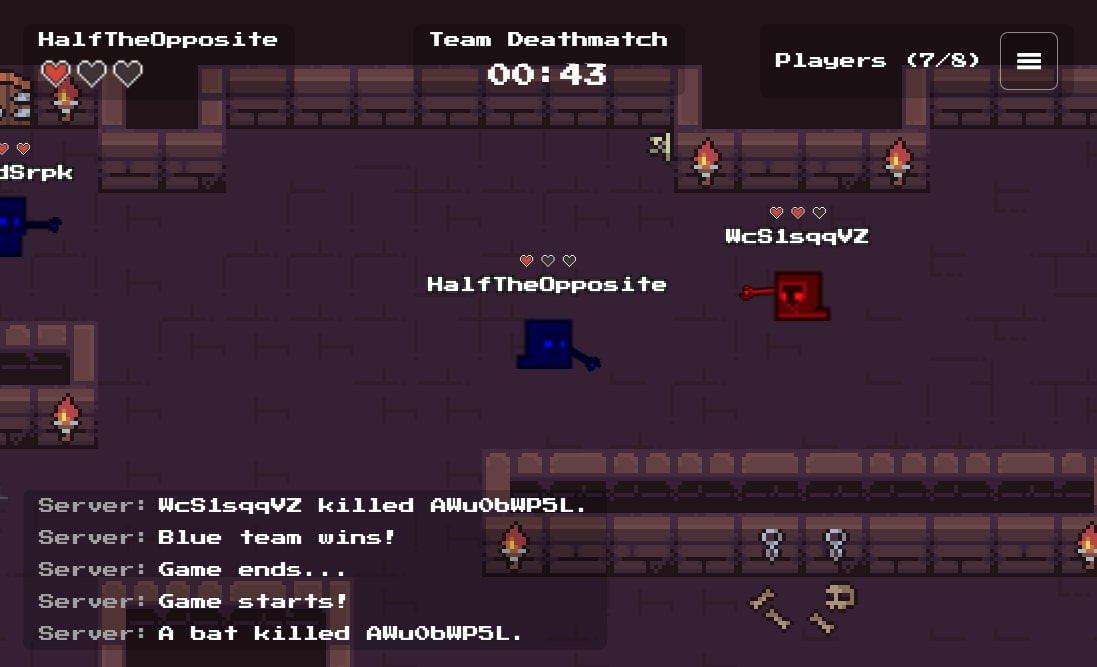
 BROWSER
Cloud hosted multiplayer backend
The multiplayer backend you own.
Player placement, parties, matchmaking and Agones dedicated servers behind one API — running in your cluster, in every region your players are. Any engine. Delivered as container images from a private Docker registry.
gamira · control plane
LIVE
Built on the standards multiplayer already runs on
Agones · Cloud Native Computing Foundation
Open Match 2
Kubernetes
OpenAPI
JWT · OAuth2
Watch the overview
Gamira in five minutes.
A walkthrough with the team: the problem every multiplayer studio hits, how Gamira solves it in four calls, what happens on launch day — and what it gives back to your engineers.
overview · 5:34
Premiering soon
The overview is in final edit.
Want a walkthrough now? Send us a message and an engineer will take you through Gamira with your game in mind.
Why Gamira
Your multiplayer shouldn't depend on someone else's roadmap.
Hosted game backends are convenient until the vendor changes the price, the product or the company. Studios have rebuilt their online stack under deadline three times in four years. Gamira takes that risk off the table: it is a complete cloud hosted multiplayer backend that runs in your cluster, from container images in a private Docker registry you have access to.
Runs in your cluster, not oursGKE, EKS, AKS, Hetzner, bare metal — your account, your keys, your player data.
Private Docker registryEvery Gamira service as a versioned container image, pulled into your own infrastructure. You run it, you control the upgrades.
Open standards underneathAgones and Open Match 2 are open-source projects backed by Google and the Cloud Native Computing Foundation — not a proprietary runtime.
incident log · game backends
Sep 2022
GameSparks retired
Amazon shuts down the backend it acquired in 2017. Studios migrate or go offline.
Mar 2026
Unity Multiplay hosting ends
Game-server hosting is wound down; studios move fleets elsewhere.
May 2026
Hathora shuts down
Server-hosting service closes after its acquisition; live games lose their servers.
Your game
Runs on infrastructure you control
Gamira lives in your cluster. Nobody else holds the off switch.
How it works
From login to dedicated server in four calls.
Placement, matchmaking and allocation are one flow, not three products glued together. Every call is in the OpenAPI spec and is the same for every engine.
player flow · eu-1
authplacementpartyticketopen match 2agonessessionudp
architecture · v13
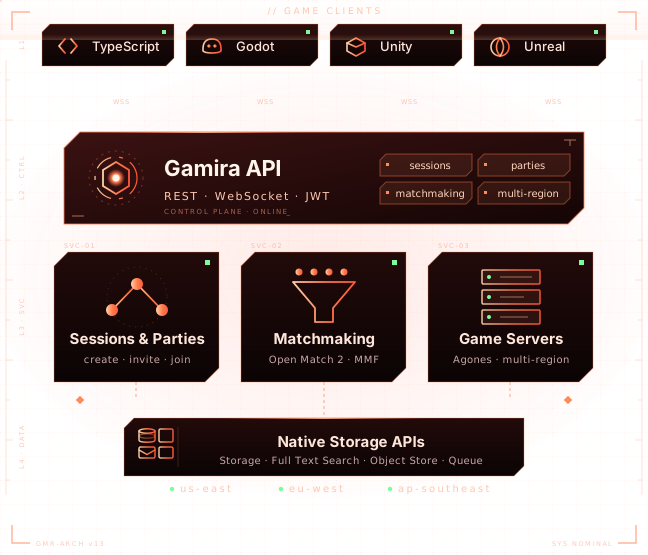
Architecture
Global control.
Global control.
Local execution.
Placement is first-class
Every player is routed to a region and a realm at bootstrap. Latency, ownership and capacity are predictable from day one — not a setting you tune after launch.
Sessions stay local
Each session belongs to exactly one realm. No global hot paths, no cross-realm synchronisation, no hidden bottleneck when a region spikes.
Dedicated servers when you need them
Prototype with lightweight native sessions, then move to authoritative Agones fleets per game mode — same API surface either way.
Reference integrations
Same API. Four engines.
A browser shooter, a Godot bomberman, a Unity co-op RPG and an Unreal Engine 5 world-scale demo all run on the same Gamira contract. If your engine speaks HTTP and a socket, it fits.
BROWSER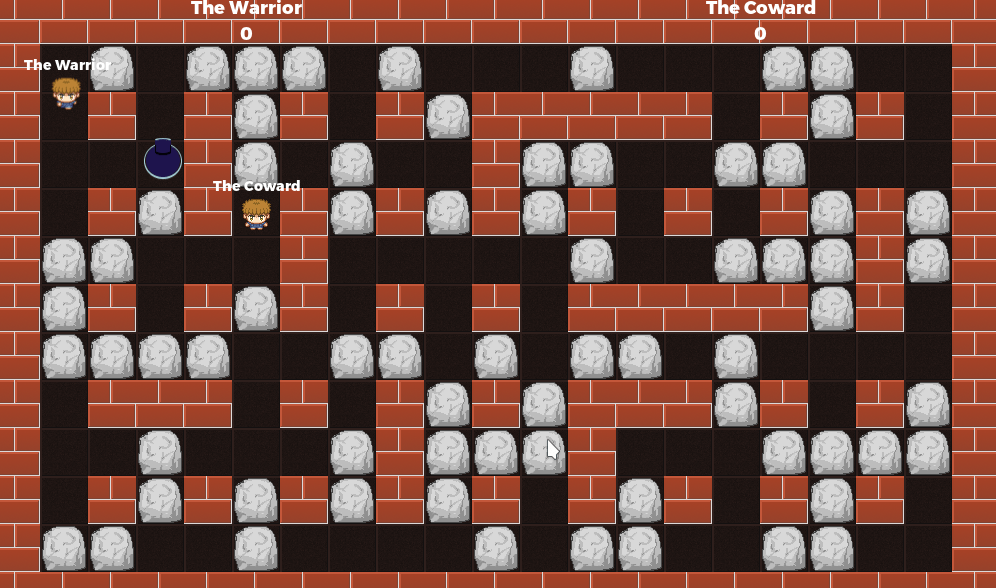 GODOT 4
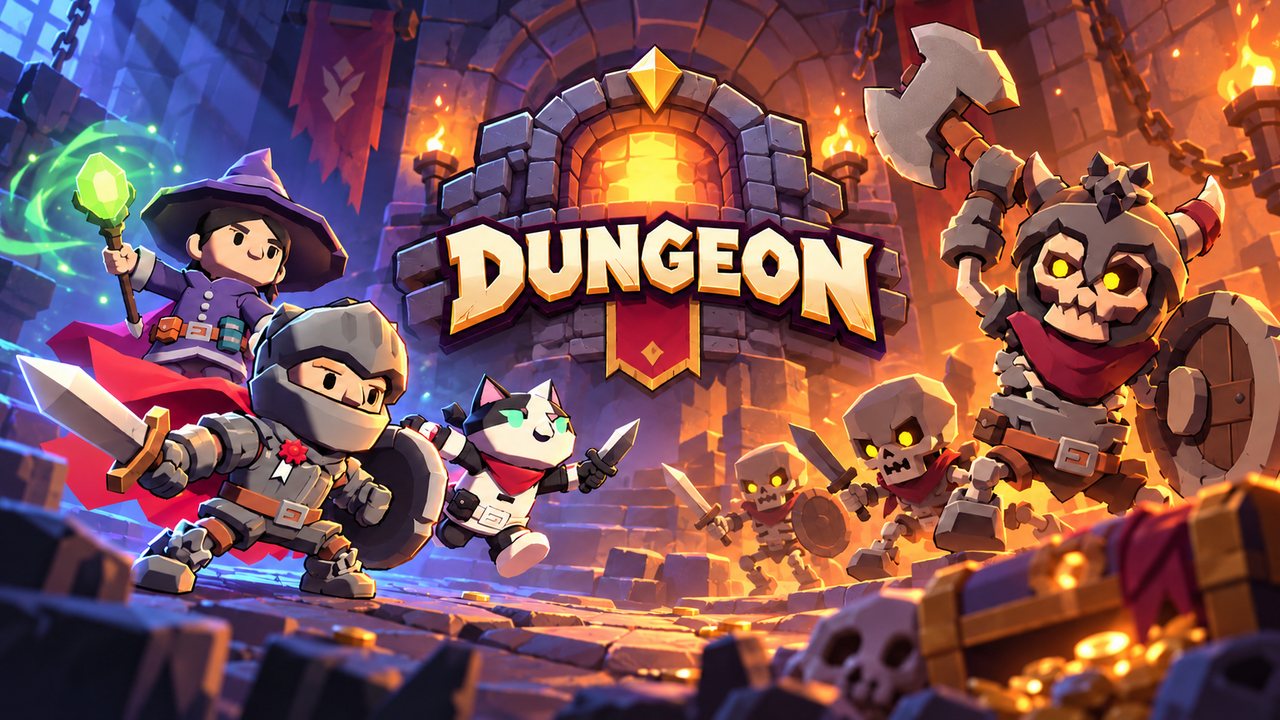 UNITY
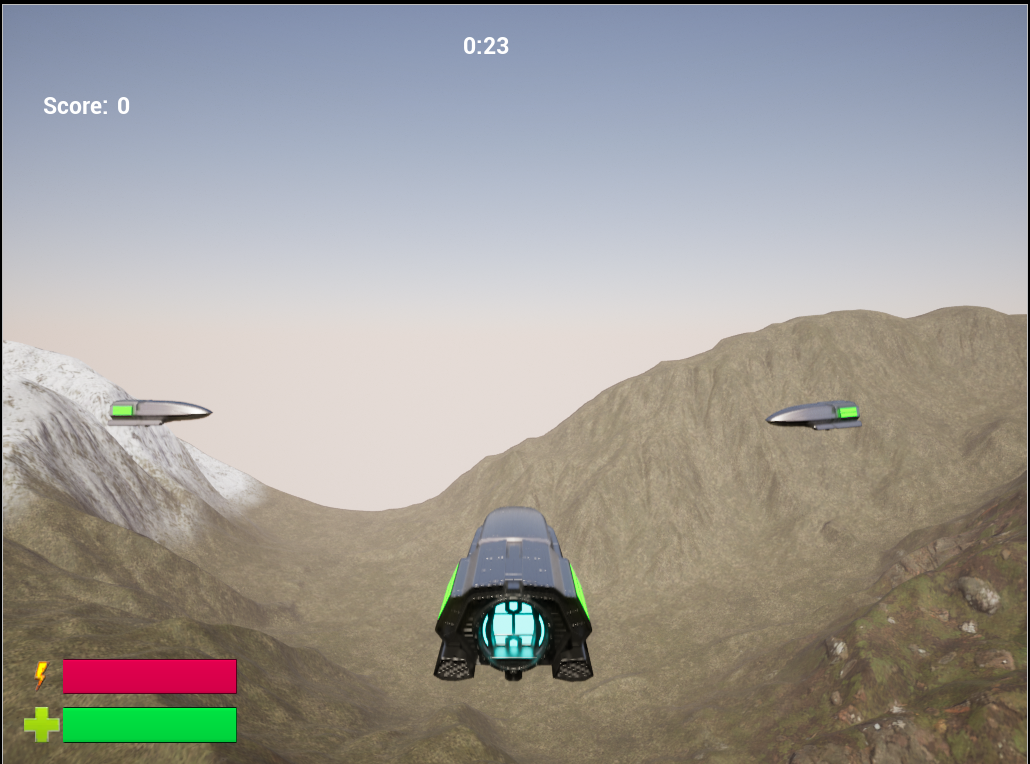 UNREAL 5
Platform
Everything between your netcode and your cluster.
Keep the netcode you like — Netcode for GameObjects, Iris, ENet, Colyseus, Mirror, FishNet. Gamira is the layer around it. Every capability below ships today and is described in OpenAPI.
Players & placement
JWT-authenticated bootstrap. Regions are chosen automatically from the players’ pings in the match or party. Roles — player, moderator, admin — drive visibility.
Parties
Create, invite, accept, leave, kick, disband. Parties carry into matchmaking so squads queue and land together.
Matchmaking
Ticket → match → session. Lua match functions per game mode, an Open Match 2 bridge and region-pinned queues.
Dedicated servers
Agones allocator bridge with fleets per game mode — TCP for WebSocket, UDP for native, plus WebRTC. Native sessions for prototypes.
Sessions
Arena and realm session kinds, public or private, with the full invite / join / start / terminate lifecycle and single-realm ownership.
Regions & ping
Region registry with stats, ping targets and selection logic, so clients land in the closest healthy realm.
Game modes
Declarative modes in multi-region storage: session kind, region pinning, matchmaking script and auto-connect behaviour.
Auth & identity
Pluggable identity provider with multiple OAuth2 providers over web, PKCE and device flows. Roles and metadata drive policy.
Deploy anywhere
A Go service with Docker Compose and Kubernetes assets, an OpenAPI spec and generated clients. Your cloud or bare metal.
also built in
Backend primitives for your own services
Datastores, queues, search and storage behind the same SDK — fewer extra systems to run next to your game.
key-value storehash tablesorted setmulti-index datastorefull-text searchobject storage · S3 APIfile storagedistributed queuevector databaseSQL REST APISQLiteFUSEbackup export / importusage trackingaccess control
Compare
Four ways to build online multiplayer.
Every option is a trade-off between convenience and control. Gamira is built for teams that want production infrastructure without handing over the keys.
| Hosted BaaSe.g. PlayFab, Unity Gaming Services | Open-source backende.g. Nakama, Colyseus | Build it yourselfAgones + Open Match + your code | GamiraCloud hosted, complete | |
|---|---|---|---|---|
| Runs in your infrastructure | No — vendor cloud | Yes | Yes | Yes — any cloud or bare metal |
| What you deploy | Nothing — vendor runs it | Source you build yourself | Code you write | Container images from a private Docker registry |
| Dedicated-server orchestration | Vendor-hosted | Bring your own / partners | Agones — you integrate it | Agones built in |
| Matchmaking → server allocation | Vendor services | Built-in matchmaker; allocation is yours | You build the glue | One flow: ticket → match → allocate → join |
| Multi-region player placement | Vendor-defined | Your design | Your design | Core model: regions & realms |
| Who sets the price as you grow | The vendor | You (plus support / enterprise tiers) | You (plus engineering time) | You run it — your compute bill |
| You start from | A sign-up form | A server to extend | An empty cluster | A complete backend on Agones |
jurisdiction
Built in the EU. Runs anywhere.
Your player data stays where you deploy it.
Gamira is developed in Bulgaria under EU law. Because it runs in your own infrastructure, you choose the regions, the provider and the data-residency rules — Frankfurt, Virginia, Singapore or your own racks.
company
Who we are
Engineers who ship backends.
Gamira is built by Evocoding, an engineering company from Burgas, Bulgaria. We work directly with studio teams — from first prototype to launch day.
- Operator
- "Evocoding" LTD · EIK 204167034
- Based in
- Burgas, Bulgaria · EU
- Contact
- [email protected]
FAQ
Questions CTOs ask us first.
Something missing? Write to [email protected] — an engineer will answer.
Do we need Kubernetes?
Not to start. Gamira runs with Docker Compose and lightweight native sessions for prototypes and small games. For authoritative dedicated servers at scale, Gamira allocates through Agones, which runs on Kubernetes — GKE, EKS, AKS, k3s, your own hardware — or even our own private cloud offering.
Which engines are supported?
Any engine that can call a REST API and open a socket. We ship reference integrations for Unity, Unreal Engine 5, Godot 4 and browser (TypeScript), all on the same API contract.
We lost our server host. Can we move to Gamira?
If your dedicated server runs in a container, it can run in an Agones fleet managed by Gamira. Talk to us about your current setup and we'll outline a migration plan with you.
Is Gamira open source?
No. Gamira is commercially licensed. Customers get access to Gamira’s container images through a private Docker registry and deploy them on infrastructure they control. The source code is not part of the licence. The licence terms are part of your individual proposal.
Where does player data live?
Wherever you deploy Gamira. It runs in your cloud account or data centre, so data residency follows your infrastructure and your policies. If you choose our private cloud offering, we agree the hosting region with you.
How is Gamira licensed and priced?
Pricing is tailored to each project: your players, regions, integration needs and support level. Every studio gets the same attention, whatever its size. See how we price or book a call.

Ship multiplayer on infrastructure you own.
Show us your game. In 30 minutes we'll map your players, regions and servers onto Gamira.